

Description
Introduction
This beginner-level course introduces the fundamentals of remote sensing and its applications in mineral exploration. Participants will learn the basics of satellite imaging, aerial surveys, and spectral analysis to identify mineral deposits, focusing on phosphate, gold, and bauxite exploration. The course provides a practical foundation for using GIS and remote sensing tools in mineral targeting.
Date
Day | Time | Price | Country |
|---|---|---|---|
Mon – Wed | 8:00 – 10:00 | $5/hrs | Turkey |
Tue – Thu | 18:00 – 19:00 | $5/hrs | Turkey |
Wed – Fri | 20:00 – 21:00 | $5/hrs | Turkey |
Sat – Sun | 18:00 – 19:00 20:00 – 21:00 | $8/hrs | Turkey |
This Training Course Will Highlight
- Basic principles of remote sensing and its applications in mineral exploration.
- Introduction to satellite and aerial imagery for geological mapping.
- Fundamentals of spectral signatures and mineral identification.
- Overview of GIS software and remote sensing platforms.
- Environmental applications of remote sensing in mining exploration.
Objectives
- Understand the fundamentals of remote sensing technology.
- Learn how to interpret satellite images for mineral exploration.
- Identify mineral alteration zones using remote sensing techniques.
- Gain basic knowledge of GIS applications in mineral targeting.
- Recognize the role of remote sensing in sustainable exploration.
Training Methodology
- Instructor-led presentations on remote sensing fundamentals.
- Basic satellite image interpretation using GIS software.
- Hands-on exercises in spectral data analysis.
- Remote sensing workflow discussions using case studies.
- Interactive map-based exercises on mineral exploration.
- Case Study Remote sensing analysis of a phosphate, gold, or bauxite deposit.
Organizational Impact
- Improves early-stage exploration efficiency through remote sensing.
- Reduces exploration costs by narrowing target areas.
- Enhances geological survey capabilities with remote sensing tools.
- Strengthens compliance with environmental regulations.
- Supports better decision-making in mineral prospecting.
Personal Impact
- Builds foundational knowledge in remote sensing applications.
- Improves skills in interpreting satellite images for geology.
- Increases confidence in using GIS tools for mineral exploration.
- Provides career advancement opportunities in exploration geology.
- Strengthens analytical thinking in mineral deposit evaluation.
Who Should Attend?
- Junior geologists and mining engineers.
- GIS specialists and remote sensing professionals.
- Environmental scientists working in mineral exploration.
- Government and regulatory agency staff overseeing mining projects.
- Undergraduate geology and mining students.
- Exploration consultants and technical staff in mining companies.
- Professionals transitioning into remote sensing applications in mining.
Course Outline
Day 1
Introduction to Remote Sensing for Mineral Exploration- Definition and principles of remote sensing.
- Types of remote sensing: passive vs. active.
- Overview of satellites and sensors used in mineral exploration.
- Geological mapping using satellite imagery.
- Introduction to GIS and remote sensing software.
- Remote sensing applications in a phosphate exploration project.
Day 2
Satellite Imaging and Mineral Identification- Basics of spectral reflectance and mineral spectral signatures.
- Common remote sensing bands used in mineral exploration.
- Introduction to Landsat, Sentinel, and ASTER satellite imagery.
- Mapping alteration zones using multispectral imaging.
- Vegetation indices and their role in mineral exploration.
- Gold exploration using remote sensing techniques.
Day 3
GIS and Remote Sensing Data Processing- GIS fundamentals for mineral exploration.
- Image enhancement techniques for mineral detection.
- Classification methods: supervised vs. unsupervised.
- Integrating remote sensing with geophysical and geochemical data.
- Introduction to Google Earth Engine for remote sensing analysis.
- Bauxite deposit mapping using remote sensing.
Day 4
Advanced Remote Sensing Applications- Hyperspectral remote sensing in mineral exploration.
- Thermal infrared imaging for mineral deposit detection.
- LiDAR applications in topographic and structural mapping.
- UAV (drone) remote sensing for mining applications.
- Cloud computing and AI in remote sensing analysis.
- Remote sensing techniques in a multi-mineral exploration project.
Day 5
Environmental and Economic Considerations- Remote sensing for environmental monitoring in mining.
- Land-use planning and sustainability in mineral exploration.
- Cost-benefit analysis of remote sensing in exploration.
- Regulations and ethical considerations in remote sensing data use.
Cancellation policy
no refund is accepted
Certificate

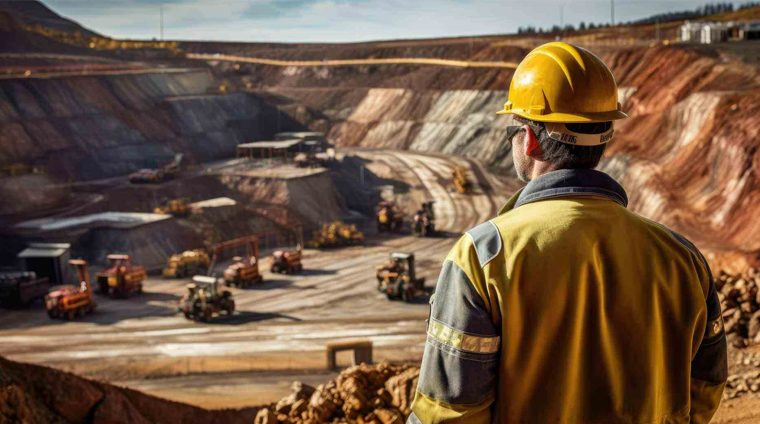
Free
Skill level Beginner
100% positive reviews
Language: English
Assessments: Self
Step Into a World of Knowledge and Growth
Imagine a place where learning is not just about theory

Courses you might be interested in
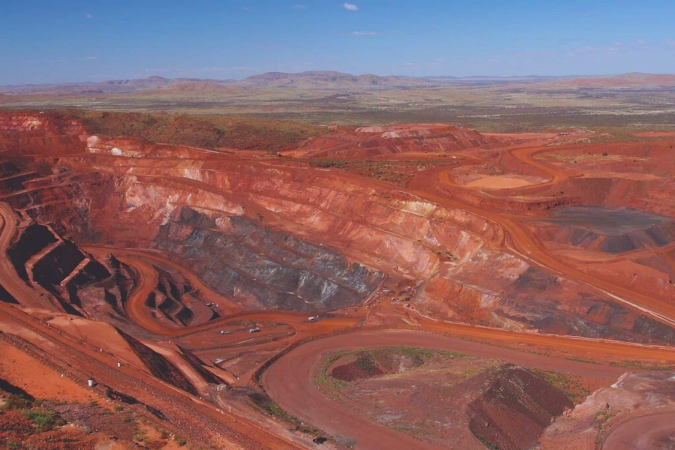
Geology of Ore Deposits The Geology of Ore Deposits course provides a comprehensive understanding of the geological processes that lead to the formation, concentration, and distribution of economically valuable mineral...
-
0 Lessons
Free
Introduction This advanced-level training course is designed for senior geologists, resource geologists, and mining engineers who require in-depth knowledge of resource estimation methodologies, advanced geostatistical techniques, and regulatory compliance. The...
-
0 Lessons
Free
Introduction This advanced-level course is designed for senior geologists, exploration managers, and data scientists seeking expertise in high-level geospatial analysis, AI-driven resource modeling, and real-time decision-making technologies. The course focuses...
-
0 Lessons
Free
Introduction This intermediate-level course focuses on advanced geospatial technologies, AI-driven analytics, and real-time data processing in mineral exploration. Participants will learn cutting-edge approaches for integrating exploration data and predictive modeling....
-
0 Lessons
Free
Free